Sage Weber · 23 October 2026
Avian Comebacks Inspire Coordinated Habitat Projects Across Fernhill Neighborhoods
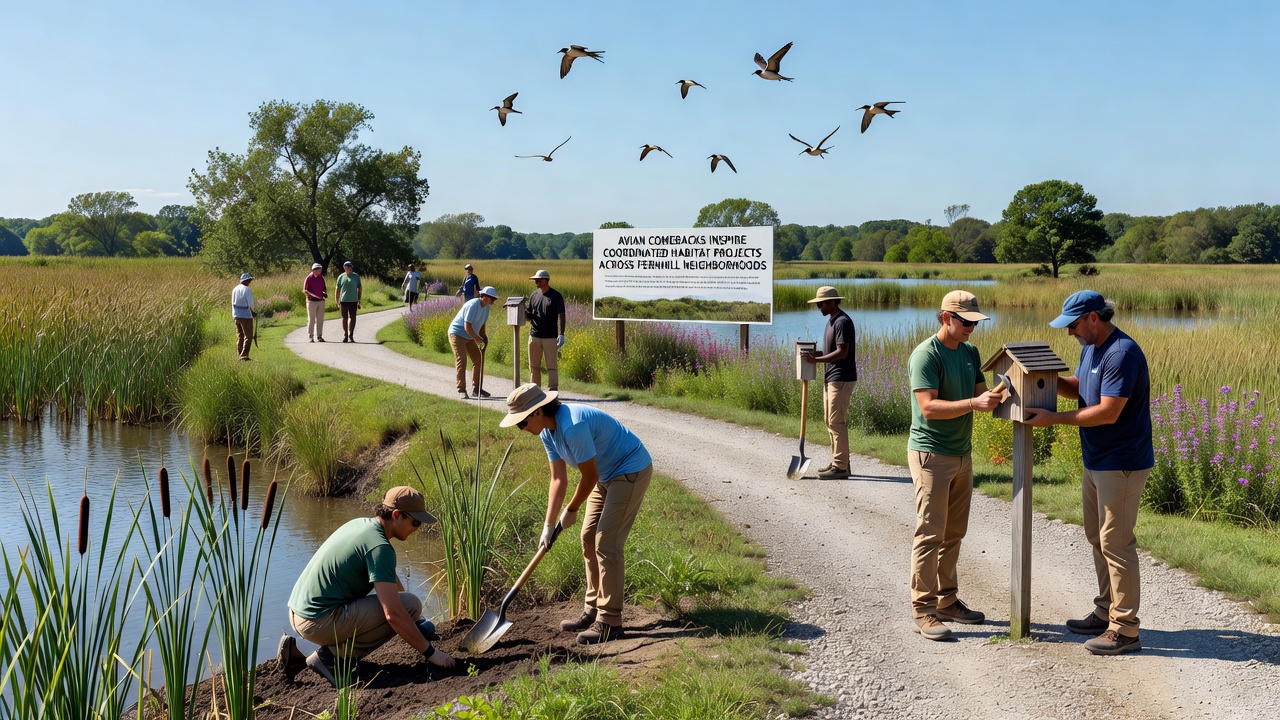
Researchers tracking bird populations in Fernhill have documented steady increases in several species over the past decade, and these trends have prompted neighborhood groups to launch synchronized habitat restoration efforts that span multiple residential zones. Data from local monitoring stations show that species such as the yellow warbler and the willow flycatcher have reestablished breeding territories in areas where tree canopy and understory cover were expanded through volunteer plantings that began in 2022.
Population Trends and Early Coordination
Figures released by regional wildlife agencies indicate that migratory bird counts rose 18 percent between 2018 and 2024 in the Fernhill watershed, and observers note that the gains coincide with the removal of invasive shrubs along utility easements and the installation of nest boxes on public land parcels. Community mapping sessions held in 2023 revealed overlapping priorities among four separate neighborhood associations, which led to a joint work plan that schedules planting events and invasive species pulls on a rotating calendar so that crews from adjacent blocks can share equipment and expertise.
One study compiled by university biologists found that connected patches of native vegetation support higher fledging rates than isolated plantings, and that pattern encouraged residents to align their backyard improvements with the larger corridor design. In October 2026 the same research team plans to repeat point-count surveys at twenty fixed locations to measure whether the coordinated approach has produced measurable gains in species diversity.
Neighborhood-Level Implementation
Along the eastern edge of Fernhill, homeowners have replaced sections of lawn with layered plantings that include serviceberry, red-twig dogwood, and native sedges, while the western blocks have focused on daylighting small drainage channels that now host dragonfly populations and provide foraging habitat for swallows. Property owners in the central zone installed motion-activated cameras that captured images of returning Anna’s hummingbirds and black-headed grosbeaks during the 2025 breeding season, and those records were shared through a common database maintained by the Fernhill Environmental Network.
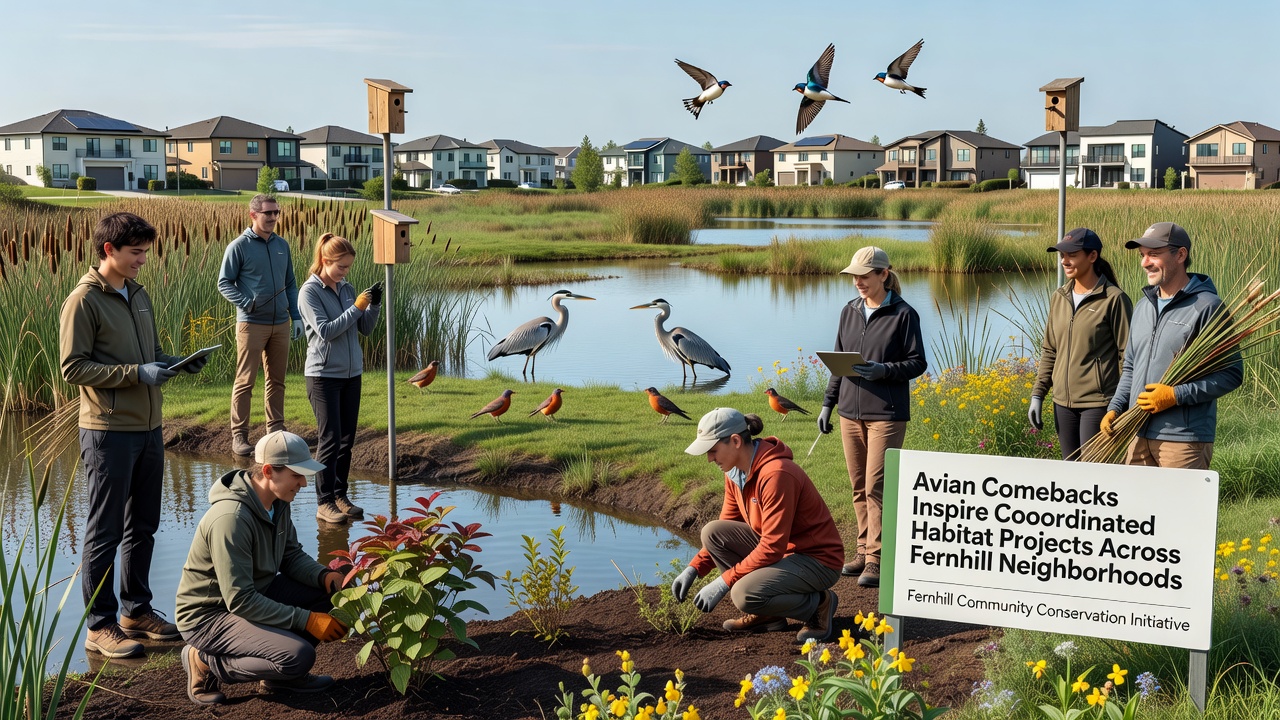
Local arborists have documented a 12 percent increase in native tree survival rates when plantings occur in clusters rather than scattered single specimens, and that finding prompted the formation of a shared nursery where seedlings are grown for distribution across all participating neighborhoods. Maintenance schedules rotate among volunteer teams so that watering and mulching duties do not fall on any single group for consecutive weeks.
Monitoring Systems and External Data Sources
Acoustic recording units placed at three strategic points have collected more than 4,000 hours of bird vocalizations since spring 2024, and analysis performed by a partner laboratory at a Canadian research institution shows consistent use of the restored corridors by both resident and migrant species. Those recordings are cross-referenced with eBird submissions from local participants, which allows project coordinators to identify gaps where additional cover or water sources would benefit specific birds.
According to data published by U.S. Fish and Wildlife Service migration monitoring programs, the Pacific Flyway has experienced parallel rebounds in several insectivorous species, and Fernhill’s efforts align with that broader trend. A separate report from Environment and Climate Change Canada notes that urban habitat connectivity projects produce the strongest results when they incorporate both public and private land, a principle that Fernhill coordinators adopted when they began outreach to apartment complexes and school grounds.
Future Milestones
Project leads have set a target of completing an additional 3.2 kilometers of continuous habitat linkage by the end of 2027, and they have secured commitments from two local businesses to sponsor interpretive signage along the main corridor route. Regular community meetings continue to adjust priorities based on the most recent survey results, ensuring that resources remain focused on the plant communities that support the greatest number of returning birds.
Conclusion
Coordinated habitat work across Fernhill neighborhoods has produced measurable improvements in bird occupancy and breeding success while creating a replicable model for other suburban areas seeking similar outcomes. Continued monitoring through October 2026 and beyond will determine whether the current pace of restoration sustains these gains over multiple migration cycles.